Secondhand Savvy: How Smart Shoppers Are Winning at Quality Without Paying Luxury Prices
Let's get one thing out of the way: shopping smart isn't a consolation prize. It's not what you do when you can't afford the "real" thing. For a growing number of Americans, it's a deliberate lifestyle choice — a way of saying that they'd rather spend money on experiences, savings, or the things that genuinely matter to them than funnel it into brand names and retail markups.
This shift in mindset has quietly become one of the most interesting cultural stories in American consumer behavior. Thrift stores are busier than ever. The resale market is projected to double in size within the next five years. Dupes — affordable alternatives to luxury products — have their own dedicated corners of TikTok and Reddit. The message is clear: people are done paying for the logo when they can pay for the thing.
Here's how to do it well.
The Thrift Store Is Not What It Used to Be
If your mental image of thrift shopping is a dusty Goodwill with sad racks of polyester shirts, it's time to update the picture. The secondhand market has been completely transformed in the last decade, driven by platforms like ThredUp, Poshmark, Depop, and Facebook Marketplace, alongside a genuine cultural reconsideration of what "new" actually means.
High-quality secondhand items are genuinely out there — you just need to know what you're looking for.
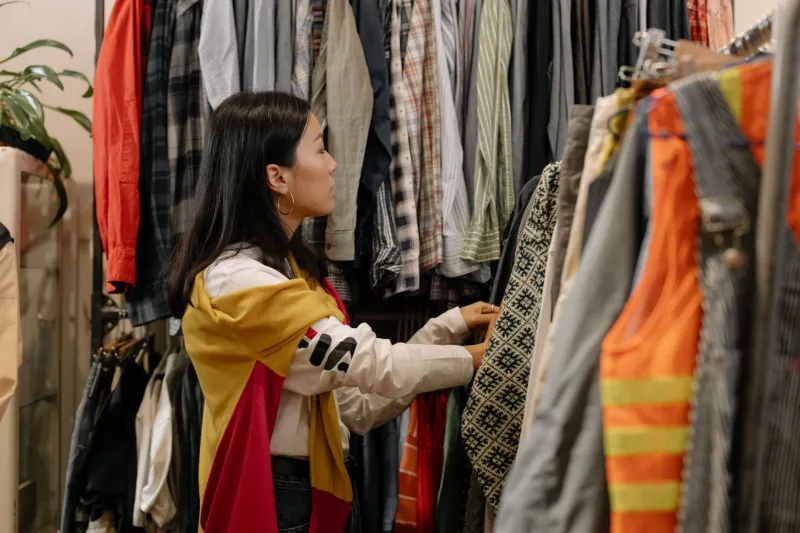
Clothing is where thrifting shines brightest. Natural fibers like wool, cotton, linen, and silk hold up beautifully over time, which means a well-made secondhand sweater from a quality brand can be in better shape than a brand-new fast fashion piece. When thrifting clothes, check seams, look at fabric weight, and inspect the label for material composition. A secondhand merino wool sweater from a name brand for $12 is an objectively better buy than a new acrylic blend for $30.
Furniture is another thrifting goldmine, particularly older American-made pieces. Solid wood construction, dovetail joints, and quality hardware were standard in mid-century furniture in a way they simply aren't in mass-market pieces today. A solid maple dresser from an estate sale will outlast three flat-pack alternatives. Learn a few basics about construction quality and you'll spot value that most people walk past.
Books, kitchenware, tools, and home décor are consistently undervalued in the secondhand market. A cast iron skillet doesn't care how old it is. A well-maintained hand tool from the 1970s often outperforms modern equivalents. These categories offer some of the best bang-for-your-buck in any thrift context.
What to Skip in the Secondhand Market
Being smart about thrifting also means knowing when not to buy used. Some categories carry real risks or simply don't offer enough value to justify the hunt.
Mattresses and pillows — hygiene concerns are legitimate here, and the structural integrity of a used mattress is difficult to assess. This is one category where buying new makes sense.
Car seats and safety equipment — unknown history means unknown risk. Don't compromise on safety-critical items.
Electronics without return policies — buying electronics secondhand from private sellers is a gamble. Without the ability to test and return, you're exposed to hidden defects. Certified refurbished programs from manufacturers or reputable retailers are a much better option.
Heavily worn shoes — footwear molds to the previous owner's foot shape over time, which can create discomfort and even posture issues. Lightly worn is fine; heavily worn is a pass.
The Dupe Conversation: When Affordable Alternatives Actually Deliver
The word "dupe" has gone mainstream, and with it has come a lot of nuance worth unpacking. A dupe isn't a counterfeit — it's a product that achieves a similar result to a luxury item at a fraction of the price, without pretending to be something it's not.
Some dupes are genuinely excellent. Others are wishful thinking. Here's how to tell the difference.
Skincare dupes are often legitimate. The active ingredients in skincare — retinol, hyaluronic acid, niacinamide, vitamin C — are widely available and well-understood. A drugstore serum with 0.1% retinol performs comparably to a prestige brand serum with 0.1% retinol. The difference in price reflects marketing, packaging, and brand positioning, not formula superiority. Dermatologists have been saying this for years.
Cookware dupes require more scrutiny. A $30 nonstick pan might perform similarly to a $120 one for the first six months — but the coating longevity, heat distribution, and overall durability often diverge significantly over time. In categories like cookware, the "buy it once" mentality sometimes makes the higher-priced option genuinely more economical over a five-year horizon.
Fashion dupes occupy complicated territory. A well-made affordable alternative to a designer handbag or shoe can be a smart choice if you're after the aesthetic without the brand value. But quality varies enormously, and some ultra-cheap fashion dupes are made under conditions that undercut the entire point of shopping consciously. Research the brand before you buy.
Tech accessories are a category where dupes routinely win. Phone cases, charging cables, laptop stands, and similar accessories are often made in the same factories as premium-branded versions. The $12 USB-C cable frequently performs identically to the $35 branded one. Look for products with solid reviews and relevant certifications.
The Psychology of Shopping This Way
Here's the thing nobody talks about enough: shopping this way feels genuinely good. Not in a deprivation way — in a satisfaction way.
When you find a beautiful secondhand coat for $20 that would have cost $180 new, there's a real sense of accomplishment. When you research a dupe and it actually delivers, you feel smart. These aren't minor feelings. They're part of why savvy shoppers become committed savvy shoppers.
There's also an environmental dimension that resonates with a lot of people. Choosing secondhand or longer-lasting alternatives reduces demand for new production, extends the useful life of existing goods, and keeps items out of landfills. For shoppers who care about sustainability, this isn't an abstract value — it's a concrete choice they make every time they open their wallet.
Building Your Own Smart Shopping Practice
The most effective approach isn't all-or-nothing. It's building a personal framework for when to thrift, when to dupe, when to buy new, and when to invest in quality.
- Thrift first for furniture, clothing, books, kitchenware, and tools
- Consider dupes for skincare actives, tech accessories, and fashion basics
- Buy new for safety equipment, mattresses, and anything where quality degradation poses a real risk
- Invest in quality for items you'll use daily for years — a great chef's knife, a solid pair of boots, a reliable backpack
At SukoStore, we believe quality and value aren't opposites. Sometimes quality means buying the best version of something new. Sometimes it means recognizing that "best" doesn't have to mean "most expensive" — or even "brand new." The smartest shoppers know the difference, and they shop accordingly.
That's not settling. That's winning.